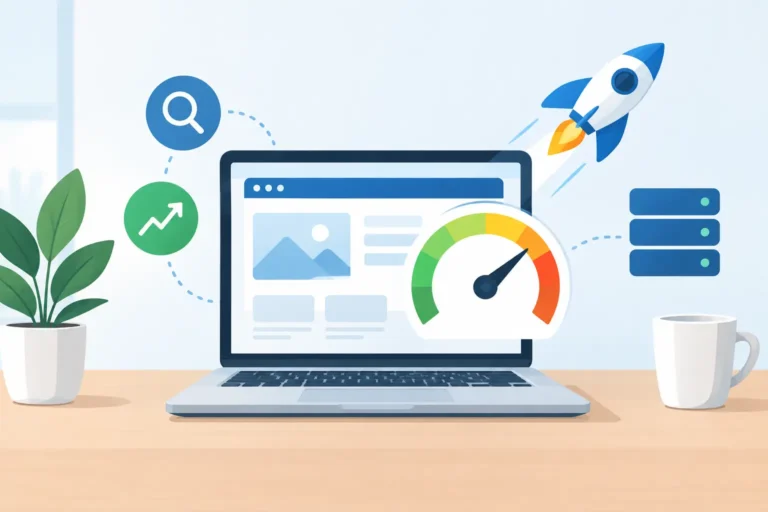
Most service business websites fail before a visitor reads a single sentence. They load slowly, look dated on mobile, bury the offer, or make people work too hard to figure out what the business actually does. If you need a guide to service business websites, start there: your site is not a digital brochure. It is a sales tool, a trust signal, and often the first real interaction a prospect has with your business.
That changes how you should build it.
A good service website does three jobs at once. It explains your offer clearly, proves you are credible, and moves the right people toward contact. If one of those parts is weak, the site may still look decent, but it will underperform where it matters most – inquiries, calls, bookings, and qualified leads.
What service business websites need to do
A service business website is different from an ecommerce store or a media site. You are usually asking someone to trust your expertise before they buy. That means design matters, but clarity matters more.
When someone lands on your site, they are usually trying to answer a small set of questions very quickly. What do you do? Who is it for? Can I trust you? How do I contact you? If your pages do not answer those questions within a few seconds, people leave. Not because your service is bad, but because your site creates friction.
That is why the best service websites are rarely the flashiest. They are structured, easy to scan, mobile-friendly, and built around buyer intent. They make it simple for a busy visitor to understand the value and take the next step.
A guide to service business websites that convert
The strongest service websites are built around business goals, not personal taste. Founders often get stuck debating colors, animations, or whether a section feels modern enough. Those choices matter less than whether the page helps someone trust you and contact you.
Start with your homepage. It should say what you do, who you help, and what action to take next. A vague headline like “We help businesses grow” is too weak on its own. A more effective message is specific and practical. Visitors should not need to scroll halfway down the page to understand the offer.
Your service pages matter just as much. If you offer multiple services, each one should have its own page with a clear explanation, likely outcomes, who it is for, and a call to action. This helps both human visitors and search engines. A single generic services page may feel simpler to manage, but it often limits visibility and makes the offer feel thin.
Trust signals should appear throughout the site, not just on an About page. Testimonials, case studies, client logos, certifications, before-and-after examples, and even straightforward process explanations all reduce uncertainty. For small businesses especially, credibility is often the deciding factor.
Then there is contact. Too many service websites treat inquiries like an afterthought. If you want more leads, your contact path should be obvious. Use clear calls to action, simple forms, and multiple ways to reach you when appropriate. If your form asks for too much upfront, conversion can drop. If it asks for too little, lead quality can suffer. The right balance depends on your sales process.
The pages that matter most
Most service businesses do not need a huge website. They need the right pages, written well.
The homepage sets the first impression and should focus on clarity, proof, and direction. Service pages should explain your offers in plain language. An About page should make your business feel real and dependable, not self-important. A contact page should remove friction. If relevant, case studies or portfolio pages can help prospects see the quality of your work and the types of clients you serve.
Location pages can also be valuable, but only if they are useful. If you serve multiple cities or regions, those pages should include real local relevance, not duplicate text with city names swapped in. Thin location pages may look like an SEO shortcut, but they usually create weak user experience and limited ranking value.
A blog is optional. For some businesses, it supports SEO and answers common buyer questions. For others, it becomes an abandoned section that adds clutter. If you are not prepared to maintain it strategically, focus on core pages first.
Design matters, but performance matters more
A polished website helps people trust you. But clean design without strategy is expensive decoration.
The best-performing service business websites use design to support action. That means readable typography, strong hierarchy, consistent branding, and mobile responsiveness. It also means fast load times, accessible layouts, and pages that do not overwhelm visitors with too much information at once.
This is where many businesses run into trouble with DIY builders or low-cost freelancers. The site may look acceptable at launch, but under the surface it is slow, poorly structured, difficult to update, or missing basic SEO and conversion fundamentals. That usually leads to a rebuild later, which costs more than doing it properly the first time.
Traditional agencies can have the opposite problem. The work is often packaged with more process, overhead, and retainers than a small business actually needs. If you are growing, you want a site that is professional and scalable without paying for layers of complexity that do not move the needle.
SEO for service websites is mostly about structure and intent
Many small businesses think SEO starts with blogging. Usually, it starts with site structure.
If your website clearly organizes services, locations, and key topics, you are already in a stronger position. Search engines need to understand what your business does and which pages are most relevant for which searches. That means clear headings, focused page topics, helpful copy, title tags, metadata, internal structure, and mobile performance.
It also means writing for real search intent. Someone searching for a specific service is often much closer to contacting a provider than someone reading a broad educational article. Both have value, but service pages usually carry stronger commercial intent.
A good guide to service business websites should also be honest here: SEO takes time. It is a long-term asset, not a quick fix. If you need leads now, paid traffic can complement search. But even paid campaigns perform better when the landing pages are clear, credible, and conversion-focused.
What to avoid when building your site
The most common mistakes are not dramatic. They are small decisions that quietly reduce trust and response.
Vague messaging is one. If your copy sounds like it could belong to any business in your category, it will not persuade anyone. Overly clever headlines often hurt more than they help.
Weak calls to action are another issue. If every button says “Learn More,” people are left without direction. You do not need aggressive sales language, but you do need clarity.
Stock-heavy visuals, outdated layouts, and inconsistent branding can also make a business feel less established than it is. So can broken mobile layouts, missing contact details, or forms that do not work properly.
A less obvious problem is launching and then neglecting the site. Websites need maintenance. Plugins, forms, hosting setup, speed, security, and content updates all affect performance over time. A site is not finished just because it is live.
Choosing the right website partner
If you are hiring help, look beyond mockups. Ask how the site will support leads, SEO, mobile performance, and updates after launch. Ask what happens if you need changes later. Ask whether pricing is transparent and whether ongoing support is actually included.
The right partner should make the process easier, not more confusing. You should know what is being built, why it matters, and what comes next. For many small businesses, that is more valuable than big agency language or the cheapest freelance quote.
A dependable website partner should also understand trade-offs. Not every business needs a large custom build. Not every business should start with heavy SEO content. Sometimes the smartest move is a lean, high-conversion site with room to grow. Sometimes a business with established traffic needs a broader content and landing page strategy. It depends on your stage, offer, and sales cycle.
That practical approach is what separates a website investment from a website expense. Studios like Duo Makers Studio position themselves well when they combine design, structure, support, and growth thinking in one clear process. That is often what small businesses actually need.
A service website does not need to be complicated to be effective. It needs to be clear, credible, and built to support the next step. If your site is not helping people trust you and contact you, it is probably time to treat it less like a design project and more like a business tool.