A service business website has a short window to do three jobs well: prove you are credible, explain what you do, and make it easy to contact you. If any one of those breaks, the site stops pulling its weight. That is why website design for service businesses is not really about decoration. It is about reducing doubt and increasing action.
Most small businesses do not lose leads because they lack talent. They lose them because their website feels unclear, outdated, slow, or thin on proof. A visitor lands on the homepage, scans for a few seconds, and leaves with questions that should have been answered immediately. What do you offer? Who is it for? Why should someone trust you? What happens next?
What website design for service businesses needs to do
A good service website works more like a salesperson than a brochure. It guides the visitor, handles objections, and points them toward a clear next step. The design matters, but not in the way most people assume. Clean visuals help, but structure, messaging, speed, and usability do more to improve conversions than trendy effects ever will.
For service businesses, trust is the real product before the sale happens. People are not buying a t-shirt they can return. They are considering a contractor, consultant, clinic, agency, legal service, or specialist they may depend on for something important. That raises the bar.
The best websites in this category usually share the same strengths. They make the offer obvious, use plain language, show real proof, and keep friction low. They also work well on mobile, because many visitors are comparing providers from their phone while commuting, waiting in line, or multitasking between meetings.
Why many service business websites underperform
The common problem is not always bad design. Often, it is misplaced focus.
Some websites are too vague. They say things like “high-quality solutions” or “trusted experts” without saying what the company actually does. Others overload the visitor with too many services at once, making the business look unfocused. Some are visually polished but have no clear call to action, so the traffic arrives and stalls.
Then there is the opposite problem: websites built cheaply and quickly with no strategic structure. These often come from DIY tools or freelancers working without a business growth lens. The result is a site that technically exists but does not support rankings, lead generation, or long-term updates very well.
Traditional agencies can miss the mark too, just in a different way. They may produce a large, expensive project with layers of process and jargon, while the business owner still struggles to edit content, understand performance, or afford ongoing support. A service business usually needs something more practical – a website that looks professional, performs well, and can keep improving after launch.
The pages and elements that matter most
A service website does not need dozens of pages to be effective. It needs the right pages doing the right job.
The homepage should quickly explain who you help, what you offer, and why a visitor should trust you. That means a clear headline, supporting copy, a visible call to action, and enough proof to reduce hesitation. Testimonials, certifications, client logos, results, or before-and-after examples can all help, depending on the industry.
Service pages are where many conversions are won or lost. Each core service should have its own page with a clear problem-solution structure. Visitors should understand what is included, who it is for, what outcomes to expect, and how to get started. This also helps search visibility, because individual service pages give search engines a better understanding of what the business offers.
An about page matters more than many owners think. For service businesses, people often want to know who they are hiring. This does not mean writing a long personal story unless it adds value. It means showing the people, experience, approach, and standards behind the business.
A contact page should be simple. Too many fields create friction. Too little context creates uncertainty. The best version usually gives a few ways to reach out, sets expectations for response time, and reassures the visitor about what happens after they submit an inquiry.
Design choices that improve conversions
Good design for service businesses is less about novelty and more about clarity. Visitors should not have to work to understand the page. Layout, spacing, headings, and visual hierarchy should help them scan quickly and find the next step.
Mobile responsiveness is not optional. If buttons are hard to tap, text is cramped, or forms are frustrating on a phone, lead volume will suffer. This is especially true for local and urgent services, where users often contact businesses from mobile devices first.
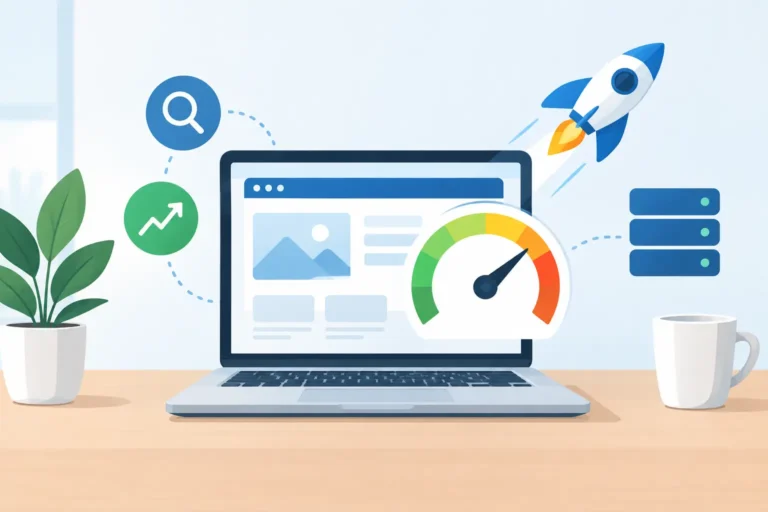
Page speed is another practical factor. Slow websites feel less trustworthy, especially when visitors are already comparing several providers. Speed also affects search performance. Businesses often underestimate how much oversized images, bloated themes, and unnecessary scripts drag down a site.
Trust signals should appear naturally throughout the site, not just on one testimonial section. Reviews, years in business, response times, guarantees, process steps, and clear pricing signals all reduce uncertainty. Not every service business should publish exact pricing, because some projects vary too much. But even then, giving a starting range or explaining how quotes work can help qualify leads and set expectations.
SEO and design should work together
A common mistake is treating SEO as something added later. For service businesses, search visibility is strongest when the website is built with SEO structure from the beginning.
That starts with page targeting. Each major service should have a dedicated page with useful copy that matches what people are actually searching for. Headings, metadata, internal structure, and location relevance all matter. If a business serves specific cities or regions, those pages need to be handled carefully. Thin location pages created only for search engines usually do not perform well for long.
Design affects SEO too. If a site is difficult to crawl, slow to load, or poorly organized, rankings can suffer. More importantly, even when traffic arrives, weak design wastes it. Search traffic only matters if the site converts. That is why the best approach combines visibility and conversion rather than treating them as separate jobs.
What to look for when hiring help
If you are investing in website design for service businesses, ask how the provider thinks about leads, not just layouts. A good partner should talk about structure, messaging, search, mobile usability, and post-launch support. If the conversation is mostly about colors and animations, that is a warning sign.
It also helps to understand what happens after launch. Many businesses have had the experience of paying for a website and then being left with no support, no maintenance, and no real plan for updates. That usually becomes expensive later. Websites need care. Plugins change, content evolves, rankings shift, and business priorities move.
Transparent pricing matters too. Service businesses often get stuck between cheap one-off builds that fail and agency retainers that feel inflated. A better middle ground is a clear package with defined deliverables, sensible support, and no hidden fees. That creates room for the website to become a working business asset instead of a one-time project that starts aging on day one.
This is where a studio model can make more sense than either extreme. A practical design partner can combine build quality, conversion thinking, and ongoing support without turning a straightforward website into a drawn-out, overpriced engagement. That is one reason many growing businesses choose providers like Duo Makers Studio over disconnected freelancers or heavy agency setups.
A better standard for service websites
The real test of a website is simple. Does it help the business win trust faster and generate more qualified inquiries? If not, the design is not doing enough.
For service businesses, the strongest websites are clear, fast, credible, and built around buyer decisions. They do not try to impress everyone. They help the right visitor feel confident enough to take the next step. That is what turns a website from an online placeholder into part of your sales process.
If your current site looks acceptable but still fails to bring consistent inquiries, the problem may not be traffic alone. Often, it is the gap between what the visitor needs to see and what the website actually communicates. Fix that gap, and the website starts acting like a business tool instead of a cost sitting online.