If you are deciding between seo or google ads, you are probably not asking a marketing question. You are asking a business question: how do I get more qualified leads without wasting money on the wrong channel?
That matters because small businesses rarely have the luxury of testing everything at once. You may have one website, one service team, a limited monthly budget, and real pressure to show results. In that situation, the wrong choice is not just inefficient. It slows growth, creates doubt, and makes your website look like an expense instead of a sales tool.
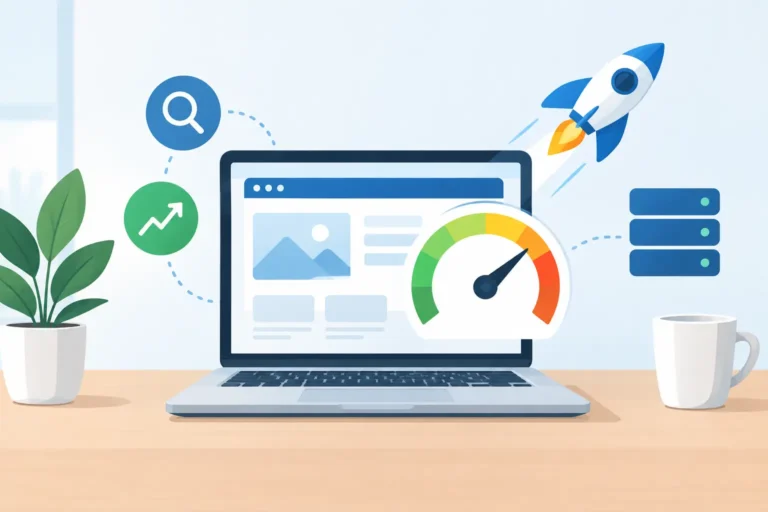
The short answer is this: SEO builds long-term visibility and lowers your cost per lead over time, while Google Ads gives you speed, control, and immediate traffic. Neither is automatically better. The right choice depends on your timeline, your margins, your local competition, and whether your website is ready to convert visitors once they arrive.
SEO or Google Ads: what is the real difference?
SEO helps your business appear in organic search results. You do not pay for each click, but you do invest in website structure, service pages, content, technical performance, and credibility signals that help Google trust your site.
Google Ads puts your business in paid search results almost immediately. You bid on keywords, pay when someone clicks, and can control where traffic goes, what message appears, and how aggressively you want to compete.
On paper, that sounds simple. In practice, the difference is less about traffic source and more about business timing.
SEO is an asset. It usually takes longer to gain traction, but the value compounds. A strong page can bring in leads for months or years without charging you for every visitor.
Google Ads is a tap. You can turn it on fast and generate demand quickly, but traffic generally stops when spending stops. That does not make it worse. It makes it useful for specific situations where speed matters more than compounding.
When SEO makes more sense
SEO is often the better choice if you want stable lead flow, your services have consistent search demand, and you are prepared to invest in your website properly. It is especially effective for businesses that want to build trust before a prospect ever gets in touch.
A good SEO strategy is not about publishing random blog posts and hoping something ranks. For most small businesses, it starts with the basics: clear service pages, strong location relevance where needed, fast mobile performance, good page structure, and messaging that matches what people are actually searching for.
This is where many businesses get frustrated. They think they have tried SEO, but what they really tried was partial SEO. Maybe a freelancer added keywords to a homepage. Maybe an agency sent reports without improving conversion paths. Maybe the website looked fine but had weak service architecture and slow mobile load times.
SEO works best when the website itself is built to support it. If your pages are thin, confusing, outdated, or not designed to convert, ranking alone will not fix the problem.
SEO usually makes more sense when:
- you want lower lead acquisition costs over time
- your budget cannot support ongoing high click costs
- your services require trust and research before someone contacts you
- you want your website to keep working even when ad spend is reduced
The trade-off is patience. SEO rarely delivers meaningful results overnight, especially in competitive categories. If you need leads this month, SEO alone may feel too slow.
When Google Ads is the smarter move
Google Ads is often the stronger choice when you need visibility now. If you are launching a service, entering a new market, trying to fill gaps in your pipeline, or validating demand before committing to a broader strategy, paid search can give you answers quickly.
It also gives you control that SEO does not. You can target high-intent keywords, send users to a focused landing page, test offers, and measure exactly what is happening. That is useful when you need data fast rather than waiting months to see whether rankings improve.
For service businesses, Google Ads can work very well when the search intent is immediate. Think emergency services, urgent repairs, high-value consultations, or niche commercial services where one good lead can justify the ad cost.
But speed comes with pressure. If your website is weak, Google Ads can become an expensive way to prove it. Sending paid traffic to a slow site with vague messaging and no clear call to action usually produces one result: more spend, not more leads.
Google Ads often makes more sense when:
- you need leads quickly
- you are testing new services or markets
- your margins can absorb paid clicks
- your offer is clear and conversion-ready
The trade-off is cost and dependence. Competitive keywords can get expensive fast, and performance often drops if campaigns are not managed carefully.
The budget question most businesses ask too late
Many business owners compare seo or google ads as if they are buying traffic in the same way. They are not.
With SEO, you are investing in the site, its structure, its content, and its authority. You are building a stronger sales foundation. With Google Ads, you are renting attention.
That means the real budget question is not, “Which one is cheaper?” It is, “What can my business afford to wait for, and what can it afford to waste?”
If you have a very limited budget and a poor website, spending heavily on ads can burn through cash without fixing the underlying issue. In that case, improving the website and building SEO foundations may be the smarter move.
If you have a healthy margin, a clear offer, and a site that converts well, Google Ads can generate opportunities while SEO gains momentum in the background.
The businesses that get stuck are usually the ones that fund traffic before they fund conversion. More visitors do not solve a weak website. They only make the weakness more visible.
SEO or Google Ads for local service businesses
For many local businesses, this is not an either-or decision forever. It is often a sequencing decision.
If someone searches for a service in their area, both organic results and paid listings can influence trust. Showing up in both places can be powerful, but it only works if your site supports the click with clear proof, relevant service content, and a simple path to contact.
Local SEO can be a strong long-term play because people often search with clear intent and location signals. Over time, ranking for those searches can reduce dependence on paid traffic.
Google Ads can be useful for filling demand gaps, promoting high-value services, or competing in areas where organic rankings will take time to build.
For businesses in competitive markets like Malaysia and Singapore, where digital competition is rising across professional services, home services, and B2B sectors, relying on one channel alone can be risky. A practical setup is often a conversion-focused website first, then paid traffic for immediate demand, with SEO building long-term stability.
How to choose without overthinking it
A simple way to decide is to look at four factors: speed, budget, competition, and website readiness.
If speed matters most, Google Ads usually wins. If long-term efficiency matters most, SEO usually wins. If your market is highly competitive and clicks are expensive, SEO becomes more attractive over time. If your website is not ready to convert, neither channel will perform as well as it should.
That last point deserves emphasis. Too many businesses ask whether they should invest in SEO or ads when the real issue is that their website is not doing its job. If the site lacks trust, clarity, mobile performance, or strong service messaging, traffic quality matters less than people think.
A smart decision often looks like this: fix the website first, then choose the channel that matches your timeline. If you need quick traction, run ads. If you want durable visibility, build SEO. If budget allows, do both in the right order rather than both badly at the same time.
Duo Makers Studio works with businesses in exactly this position – needing a site that looks credible, performs properly, and supports lead generation without agency bloat or freelancer guesswork.
The best marketing channel is usually the one your website can actually support. Get that foundation right, and the choice between SEO and Google Ads becomes much easier.