A visitor lands on your website and makes a judgment in seconds. Not about your logo or your color palette alone, but about whether your business feels legitimate, current, and worth contacting. That is why learning how to improve website credibility matters so much. If your site looks outdated, feels thin on detail, or raises small trust concerns, people rarely investigate further. They leave.
For small businesses, credibility is not a branding extra. It directly affects inquiries, sales, and referrals. A polished website helps people feel safe enough to take the next step. A weak one creates hesitation, even when your service is excellent.
How to improve website credibility starts with clarity
Most credibility problems are not dramatic. They come from small moments of confusion. If visitors cannot quickly understand what you do, who you help, and what to do next, trust drops fast.
Your homepage should answer three basic questions almost immediately: what the business offers, who it is for, and why it is a good choice. This does not require clever copy. It requires direct copy. A vague headline may sound polished, but it often underperforms because it forces visitors to guess.
Clear messaging also means using plain language on service pages. If you are a contractor, consultant, clinic, or local service business, say exactly what you provide. Do not make people decode industry terms. Credibility grows when a site feels easy to understand because easy usually feels more honest.
Design quality affects trust more than most owners expect
People do judge websites by appearance. That is not superficial. They use design quality as a shortcut to assess professionalism, attention to detail, and business stability.
A credible website does not need to look expensive, but it does need to look intentional. That means consistent typography, balanced spacing, readable text, and a layout that feels current. If pages look crowded, misaligned, or patched together from different templates, visitors notice. They may not articulate the issue, but they feel it.
There is a trade-off here. Some businesses over-design their site and end up hurting usability. Fancy animations, unusual navigation, or oversized visual elements can make a website feel stylish while making it harder to trust. In most cases, simple and well-structured beats impressive but confusing.
Strong trust signals reduce doubt
If you want to know how to improve website credibility in practical terms, add evidence. Visitors are not only looking for promises. They are looking for proof.
The strongest trust signals usually include real client testimonials, clear contact information, recent project examples, business details, and visible policies where relevant. For service businesses, testimonials work best when they sound specific rather than generic. “Great service” is weak. A short statement that mentions the problem solved, the result, or the experience feels more believable.
Photos also matter. Real team photos, office images, or project visuals often build more trust than polished stock photography. Stock images are not always bad, especially when budgets are tight, but too many can make a business feel interchangeable. If every smiling face on the site looks like a stock model, credibility can slip.
If your business has certifications, associations, awards, media mentions, or years of experience, show them where appropriate. Just do not clutter the page with badges that mean little to your audience. The goal is reassurance, not decoration.
Contact details and business information should be easy to find
One of the fastest ways to lose trust is to hide basic business information. A credible company makes it easy to get in touch.
At a minimum, your website should clearly display a contact page, email address, phone number if relevant, and service area if your business depends on location. For some companies, especially local services, adding a business address or registered details helps even more. People want to know there is a real business behind the website.
This is especially important for businesses serving competitive markets. In places like Malaysia and Singapore, where many customers compare providers quickly online, a site that feels anonymous can get filtered out fast. Buyers want signs of stability.
Response expectations also shape credibility. If your contact form says nothing, visitors may wonder what happens next. A simple note explaining when you respond and what they can expect makes your process feel more reliable.
Content depth matters more than having more pages
Thin content creates doubt. If your service pages are too short, too generic, or obviously written for search engines first, visitors notice. They start wondering whether your business is experienced enough, established enough, or invested enough.
That does not mean every page needs to be long. It means each important page should answer real buyer questions. Explain your service, your process, your typical timeline, what is included, and what makes your approach practical. This is where many small business websites fall short. They try to look clean by saying very little.
The better approach is concise but complete. Give enough detail to reduce hesitation. A visitor should not have to call you just to understand the basics.
Performance and mobile usability are credibility issues
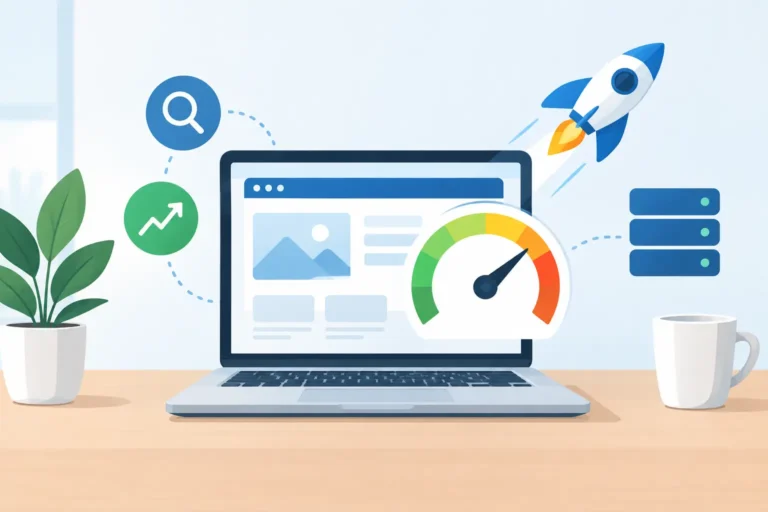
A slow or broken website does not just frustrate people. It makes your business look less dependable.
Mobile experience matters especially because many visitors will meet your business on a phone first. If text is hard to read, buttons are awkward, or forms are frustrating, trust drops before your offer has a chance to work. The same goes for broken layouts, missing images, or outdated plugins that create errors.
This is where DIY websites and neglected freelance builds often cause problems. They may look acceptable at launch, but without proper maintenance, speed and reliability slip over time. A website that is technically unstable sends the wrong message about the business behind it.
SEO and credibility are closely connected
Many business owners treat SEO and trust as separate topics, but they overlap. A well-structured website tends to feel more credible because it is organized, readable, and aligned with what people are searching for.
When page titles, headings, and content match user intent, visitors feel like they landed in the right place. When a page promises one thing in search results but delivers something vague or irrelevant, that mismatch weakens confidence.
Search visibility itself can also influence perception. People often trust businesses more when they appear professionally in search with clear page titles and relevant descriptions. Ranking well is not proof of quality on its own, but poor search presentation can make a business seem careless.
How to improve website credibility with a better process
Sometimes the issue is not one page or one design choice. It is the overall website process behind the business. Sites lose credibility when they are built without strategy, launched without testing, and left without support.
That is why the most credible websites usually come from a structured approach. Clear messaging, thoughtful design, performance checks, search-friendly structure, and ongoing maintenance all work together. If one piece is weak, the whole impression suffers.
This is also where business owners need to be careful about false savings. A cheap freelancer may deliver a site quickly but leave you with weak copy, poor mobile performance, or no support after launch. A bloated agency may charge far more than necessary for features you do not need. The better option is often a partner that focuses on business outcomes, keeps pricing transparent, and supports the site after it goes live.
Small updates can make a big difference
You do not always need a full redesign to build trust. Sometimes the biggest gains come from fixing a few high-impact issues: rewriting your homepage headline, adding better testimonials, improving your contact page, replacing stock images, or speeding up mobile load times.
If your site already gets traffic but not enough inquiries, credibility may be the missing link. Visitors may understand your offer, but still not feel confident enough to reach out. That gap is where trust signals, clarity, and usability do the heavy lifting.
A good website should make your business feel established, even if you are still growing. It should reduce doubt, not create it. If every part of the site makes the next step feel easier, credibility follows naturally.
The strongest websites are not the loudest or the most complex. They are the ones that make people think, clearly and quickly, this business looks like it knows what it is doing.