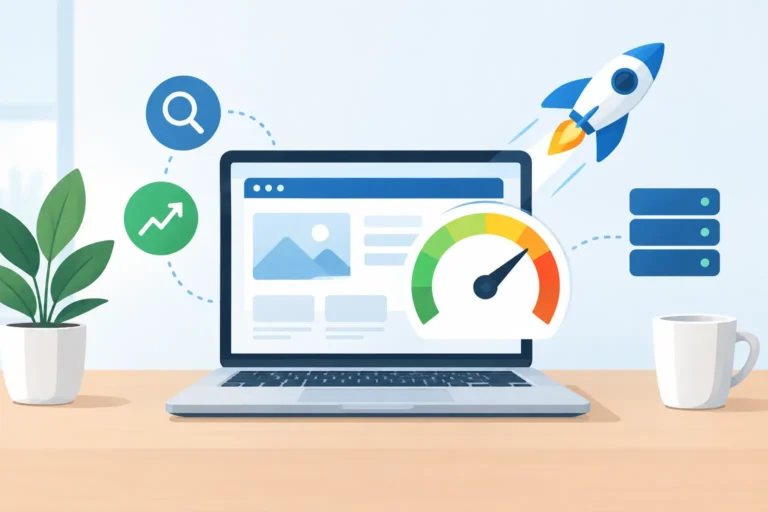
A new website can look professional on launch day and still sit quietly while competitors collect the calls, quote requests, and bookings. That is where the Google Ads versus SEO decision becomes practical, not theoretical. Small businesses need to know where their next leads will come from, how much those leads will cost, and whether the channel can keep working as the business grows.
The short answer is that Google Ads creates speed, while SEO builds momentum. The better answer is that most growing businesses eventually need both – but not always at the same time, in the same proportion, or with the same budget.
Google Ads versus SEO: the core difference
Google Ads puts your business in front of people searching now. You choose the keywords you want to appear for, set a budget, and pay when someone clicks. A plumber can appear for an urgent repair search this week. A consultant can test demand for a new service before committing months to content and optimization.
SEO, or search engine optimization, improves your ability to appear in unpaid search results. It involves a technically sound website, clear service pages, useful content, local signals where relevant, and a structure that helps search engines understand what you offer. It takes longer because visibility must be earned, but strong rankings can continue bringing qualified visitors without paying for every click.
This is not a simple choice between “paid” and “free.” Ads require ongoing media spend. SEO requires ongoing strategic work, whether that means improving pages, creating content, earning authority, or maintaining the technical health of the site. The real question is which investment best suits your current business goals.
When Google Ads makes more sense
Google Ads is usually the stronger first move when you need demand quickly. That could mean launching a new service, filling a quiet month, entering a competitive market, or generating leads while a new website and SEO foundation are still gaining traction.
The biggest advantage is control. You can target high-intent searches, limit campaigns to a defined location, set daily budgets, and pause activity if capacity changes. Unlike organic rankings, which can take time to move, an ad campaign can provide useful data within days. You learn which services get searched, which messages earn clicks, and which landing pages turn attention into inquiries.
That speed comes with a condition: sending paid traffic to a weak website is expensive. If the page is slow, vague, difficult to use on a phone, or missing a clear next step, clicks will disappear without producing sales. Paying for traffic does not fix unclear offers or low credibility. It simply sends more people to the problem.
Google Ads also becomes less efficient when campaigns are left on autopilot. Broad keywords, irrelevant search terms, poor location settings, and generic ads can consume a small business budget very quickly. A campaign needs active monitoring, conversion tracking, and landing pages built around the service being promoted.
Ads are a practical fit if your business has a clear offer, enough margin to pay for acquisition, and a reliable way to follow up with leads. If a missed call or slow reply loses the opportunity, increasing ad spend will not solve the underlying issue.
When SEO is the smarter investment
SEO makes more sense when your business wants a dependable source of visibility that compounds over time. It is especially valuable for service businesses whose customers regularly search for solutions before they buy – accountants, clinics, contractors, professional services, home services, and specialized B2B providers.
A well-structured SEO program starts with the pages that matter commercially. Your core services need their own focused pages, written around the problems customers search for and the reasons they should choose you. Your website should load quickly, work cleanly on mobile devices, and make it easy for visitors to contact you. These are not technical extras. They affect both rankings and conversion rates.
SEO also supports trust in a way ads cannot fully replicate. Many searchers recognize sponsored results and scroll to the organic listings to compare options. Appearing there suggests that your business is established, relevant, and credible. It does not guarantee a sale, but it can lower the friction before someone visits your site.
The trade-off is patience. New sites rarely rank for competitive terms immediately, and businesses that promise instant first-page results are usually selling false certainty. Progress depends on your market, website quality, competition, reputation, and the usefulness of your content. Local service searches may show movement sooner than broad national keywords, but neither should be treated as a quick fix.
SEO is also not something to “complete” once and forget. Search behavior changes, competitors improve, pages become outdated, and technical issues appear over time. The work is ongoing, though the payoff can become more efficient than paid acquisition once valuable rankings are established.
Cost is more than the monthly budget
A common mistake is comparing the price of a Google Ads campaign with the price of SEO work and choosing the lower number. That misses the bigger cost: what happens after a visitor arrives.
With Ads, costs are visible. You can see spend, clicks, leads, and cost per lead if tracking is set up properly. This makes paid search easier to measure in the short term. However, the traffic generally stops when the budget stops. If your most valuable keywords are competitive, cost per click can rise as more advertisers enter the market.
With SEO, costs are less immediate but more cumulative. You are investing in pages, content, site performance, and visibility that can keep producing value after the initial work. Yet SEO can also waste money when it focuses on vanity traffic rather than commercial intent. Ranking for a broad informational term is not useful if the visitors have no reason to contact your business.
For both channels, judge performance by more than clicks. Track qualified inquiries, booked consultations, sales opportunities, and revenue where possible. Ten low-quality form submissions are not better than three serious prospects. The right channel is the one that brings leads your team can actually close at a profitable cost.
Your website is the conversion point
The Google Ads versus SEO debate often ignores the asset both channels depend on: your website. Search campaigns can bring visitors to the door, but the site must make a convincing business case once they arrive.
A conversion-focused website answers basic questions quickly. What do you do? Who is it for? Why should a customer trust you? What should they do next? It should show proof, remove unnecessary friction, and work just as well on a mobile phone as it does on a desktop screen.
This is where many small businesses lose ground to larger competitors. They pay for ads that lead to a generic homepage, or they invest in SEO while key service pages lack clear pricing context, proof of experience, or simple contact options. A polished design alone is not enough. Every important page should support a decision.
Before increasing traffic, check whether your tracking is accurate, your contact forms work, phone numbers are easy to tap, and lead notifications reach the right person. These details sound basic, but they protect the value of every marketing dollar.
A practical way to choose your starting point
If you need leads in the next 30 to 90 days, start with a tightly controlled Google Ads campaign while improving the landing pages that support it. Focus on a small number of high-intent services rather than trying to advertise everything at once. Use the early results to refine your offer, messaging, and follow-up process.
If you have steady demand but rely too heavily on referrals, invest in SEO foundations first. Build clear service pages, address local relevance where applicable, improve site speed, and create content around questions prospects ask before buying. This creates a stronger long-term base than publishing random blog posts or chasing every possible keyword.
If budget allows, combine the two deliberately. Ads can generate immediate visibility and keyword data. SEO can reduce your reliance on paid clicks over time. The campaigns should inform each other: search terms that convert in Ads can guide SEO priorities, while strong organic pages can become better landing pages for paid campaigns.
Do not split a limited budget evenly just because it feels balanced. A small, unfocused Ads budget may not gather enough data, while a small SEO effort may not create meaningful progress. Put enough behind the channel that matches your immediate constraint, then expand once the website and measurement are working.
A dependable growth plan is not about choosing the trendiest channel. It is about building a website that earns trust, measuring what produces real inquiries, and investing where your business can turn attention into revenue. If you are unsure where the gaps are, Duo Makers Studio can help you assess the website foundation before you pay for more traffic.